



Introduction
In a game like Avatar World, where creativity is unlimited and every object can be interacted with, players rarely think about technical limitations. The appeal lies in freedom—designing characters, building homes, and creating stories without constraints. However, beneath this seemingly smooth sandbox lies a persistent and specific issue that affects long-term gameplay: state instability caused by object persistence and update-driven desynchronization.
This is not a generic “lag” or “buggy game” complaint. Instead, it is a structural problem tied to how the game continuously expands its world through updates while maintaining persistent player-created states. Over time, especially after updates or long sessions, players begin to experience disappearing items, broken interactions, missing avatars, or even complete world resets.
This article explores that issue deeply—not from a casual player perspective, but from a systems-thinking angle. We will break down how Avatar World stores and updates data, why instability appears, how it evolves over time, and what it reveals about sandbox game design.
The Design Philosophy: A Fully Interactive Sandbox
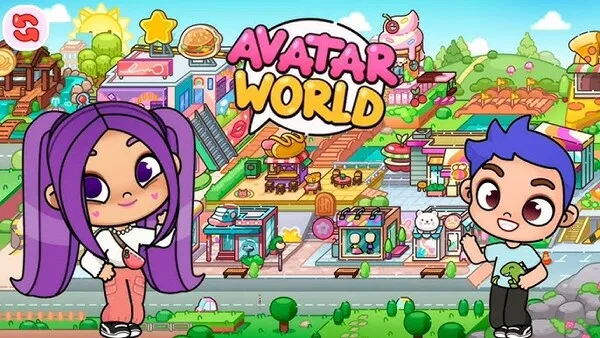
Avatar World is built as a sandbox life-simulation game where nearly every object can be interacted with. This design philosophy is powerful because it encourages imagination—but it also creates a hidden technical burden.
Unlike linear games, Avatar World does not “reset” after each session. Instead, it preserves the player's world state: object positions, avatar customization, and environment changes. Over time, this creates a growing dataset that must be loaded, synchronized, and updated.
Why this matters
The more objects and interactions a player creates, the more complex the saved state becomes. This complexity is the root of instability.
Persistence as a Double-Edged Sword
Persistence is what makes Avatar World feel alive. Your house stays decorated, your characters stay where you left them, and your story continues seamlessly. But persistence also means the game must track everything.
As sessions grow longer, the system accumulates:
- Moved objects
- Customized avatars
- Item interactions
- Location-specific changes
The hidden cost
Each saved element adds to memory load and increases the chance of conflict when updates modify the same assets.
Update Cycles and Data Rebuilding Conflicts
Avatar World operates as a live-service game with frequent updates adding new locations, items, and features. While this keeps the game fresh, it introduces a critical issue: data rebuilding conflicts.
After updates, players often encounter:
- Black screens
- Missing items
- Long loading times
These occur because the game attempts to reconcile old saved data with new structures.
Key insight
The system is not failing randomly—it is struggling to merge two versions of reality: the player's customized world and the updated game framework.
The “Disappearing Object” Phenomenon
One of the most reported issues is objects or characters disappearing after updates or reloads.
What players observe
Items vanish, avatars don’t appear, or locations reset unexpectedly.
This is not simple data loss—it is often a reference mismatch, where saved objects no longer align with updated assets.
Save System Limitations and Overwrites
Avatar World relies on a simplified save system designed for accessibility rather than robustness. While this works for casual play, it creates vulnerabilities:
- Incomplete saves when exiting quickly
- Overwriting of previous states
- Lack of version rollback
Critical weakness
There is no strong version control, meaning corrupted or mismatched states cannot easily be restored.
Long Session Degradation
Players who engage in extended play sessions often report gradual instability:
- Slower interactions
- Delayed object responses
- Increased crashes
This aligns with the fact that the game may slow down or close after long sessions, especially on weaker devices.
System explanation
As more interactions occur, the system must track more states, increasing memory pressure and processing load.
Interaction Saturation: Too Many Active Objects
Unlike many games, Avatar World allows nearly all objects to be interactive. This creates a phenomenon called interaction saturation.
What happens
When too many objects are active:
- Collision and interaction checks increase
- Game logic loops become heavier
- Unexpected behavior appears
Example
A room filled with items, characters, and ongoing interactions becomes exponentially harder to simulate.
The Role of Device Limitations
Not all instability is purely software-related. Device performance plays a major role:
- Low RAM → crashes
- Weak CPU → lag
- Storage issues → corrupted cache
Performance issues are especially noticeable on older devices.
Important distinction
Device limitations amplify the problem, but they are not the root cause.
Modded Versions and Instability Amplification
Some players use modified versions of the game to unlock premium content. However, these versions significantly worsen stability.
- Incompatible updates
- Broken features
- Unpredictable behavior
Conclusion of this section
Modded versions highlight the fragility of the system—they remove safeguards that already struggle under normal conditions.
Why This Problem Is Structural, Not Temporary
The key insight is that Avatar World’s instability is not just a bug—it is a consequence of its design:
- Persistent worlds
- Frequent updates
- High interactivity
- Simple save systems
Engineering perspective
This is a scaling problem. The game performs well at small scale but struggles as the player's world becomes more complex.
Conclusion
Avatar World succeeds as a creative sandbox because it removes limitations—but that same freedom creates hidden technical challenges. The combination of persistent world states, frequent updates, and highly interactive environments leads to instability that manifests as disappearing items, crashes, and inconsistent behavior.
Understanding this issue changes how we see the game. It is not simply “buggy”—it is a system under increasing pressure as creativity expands. The solution is not just patches, but smarter design: better state management, version control, and limits on interaction density.
In the end, Avatar World teaches an important lesson about sandbox games: freedom must be balanced with stability. Without that balance, even the most creative worlds can begin to break under their own complexity.